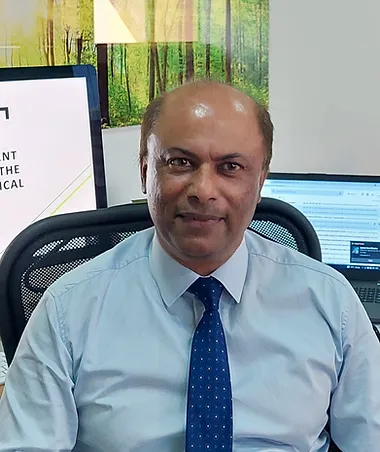
Prof. Theesan Bahorun
MRIC is working to make Mauritius a global hub for innovation and research.
Conservation Costs Are Rarely Reported, Making It Difficult to Prioritize Funding
The costs of conservation actions are rarely reported, making it difficult to decide on the best ways to protect and restore nature, a new study shows. It looked at nearly 2,000 peer-reviewed papers on wildlife conservation action and found that only 13.3% reported costs, and only 8.8% reported total costs.

Africa Faces Hard Knocks As Rich Countries Take Manufacturing Back Home
The global economic crisis triggered by the outbreak of the COVID pandemic in 2020 and Russia’s invasion of Ukraine in February this year has intensified the risk of declining trade integration between countries. A process referred to as the deglobalisation of trade.
The pandemic sent shocks through supply chains across the world. As a result, companies in some advanced economies have started to prioritise bringing production that was previously outsourced to Asia back home – or closer to home. The expectation is that this will avert ongoing – and future – supply-chain disruptions, ensuring a steady and reliable supply of goods.

Andrew Amadi
“Africa has an advantage that it has never had before. The cheapest electricity in the world today, is daytime solar in Africa.
If we have the potential for the cheapest electricity, we also have the potential for the cheapest transportation. 40 percent of the national reserves of foreign currencies are used to purchase and import petroleum products. If a large amount of that cost is alleviated in African countries, it creates a system that is immune to fossil fuel-based inflation.”
New Forms Of Urban Planning Are Emerging In Africa
Rapid urban growth and an increasing number of climate change related disasters, such as the recent floods in South Africa’s KwaZulu-Natal province, have put the importance of sound urban planning in Africa in the spotlight.
Urban plans are seen as the key to achieving inclusive, safe and sustainable cities. But urban scholars have argued for decades that for plans to be effective we need to move away from the traditional way of doing things. This requires dropping a top down approach – master planning – and opting instead for strategic forms of planning that are targeted, flexible and participatory.
Elvis Sitati
Our platform will have an impact on formulating environmental policy because leaders will now be accessible to the people regardless of leadership level. This means that the people will get to contribute when it comes to developing environmental ordinances and laws at every level of governance in Kenya.
The platform will also be a medium for education on climate issues. We will have messages that will educate on climate change mitigation, climate change impact, and also early warning.
The Need for Climate Reparations Is Now Undeniable
The latest UN climate report highlights how communities that have contributed the least to climate change are suffering the most. That's the sobering assessment made by scientists on the United Nations' Intergovernmental Panel on Climate Change (IPCC), which earlier this week published its latest report, on the impacts of the climate crisis.
Demands such as these would not just be an attempt to right historical injustices created simultaneously by colonialism and climate change, but to prevent them occurring again in the future.
Namibia to Host First Radio Telescope in Africa that Can Detect Millimetre Wavelength Radiation
Thanks to Radboud University’s commitment of ten years of funding and support to the Africa Millimetre Telescope in partnership with UNAM, Namibia is poised to remain a significant location for space research.
This development has set in motion the start of the Africa Millimetre Telescope (AMT) project in Namibia – which aims to realise a radio telescope in the country.