Diane Mongudi
A key project here is the "Smart Botswana Lab" equipped with the latest technologies in AI, virtual reality, and 3D printers.
University of Botswana: 3D Printing for Medical Innovations
The University of Botswana (UB) is pioneering the use of 3D printing technology to revolutionize disease treatment and improve healthcare for Batswana. Led by Dr. Shathani Nkhwa from UB's Faculty of Medicine, the project focuses on creating customized medical solutions for complex conditions
3D printing technology to revolutionize disease treatment in Botswana
The University of Botswana (UB) has embarked on an ambitious journey to revolutionize disease treatment through 3D printing technology, aiming to improve the health of Batswana. This initiative aligns with UB's strategic goal of creating societal impact through cutting-edge research and innovation. By leveraging 3D printing technology, which has shown significant potential in improving medical treatments in developed countries, UB is positioning itself at the forefront of medical innovation in Africa.
AI Driven Agritech Combating Food Insecurity in Botswana
Botswana, a country that has experienced rapid economic growth and is now classified as an upper-middle-income nation, faces a paradoxical challenge in its agricultural sector. Despite its economic progress, the country grapples with significant food insecurity issues, with the World Food Programme estimating that 22% of its population experiences moderate to severe food insecurity
Drones and AI Revolutionize Wildlife Conservation in Botswana
Researchers at the Botswana International University of Science and Technology have developed a groundbreaking approach to wildlife monitoring and anti-poaching efforts, combining drone technology with artificial intelligence (AI).
Professor Alinah K. Segobye
"The younger generation is less inhibited and are willing to take risks in experimental areas of their lives."
UB and BITRI Collaborate with CUT to Develop Sustainable Ways of Impacting Society
University of Botswana and Central University of Technology (CUT) in South Africa continue to explore new ways of collaborating and strengthening existing ties in different areas of Teaching and Learning and Research.
Against this background, a delegation from CUT led by Vice Chancellor for Research, Innovation and Engagement, Professor Alfred Ngowi, visited the University of Botswana on January 24, 2022. He expressed his excitement that UB together with BITRI and CUT continued to break new ground in research, citing Dr Shathani Nkhwa’s 3D printing of medical devices project.

Dr Odirile Helps Establish University of Botswana and Ohio University Partnership
Director of the University of Botswana Careers and Counselling Centre, Dr Lucky Wakantse Odirile is at Ohio University as a Robert and Rene Glidden Visiting Professor in The Patton College of Education for the 2021-22 academic year. During her stay there, Dr Odirile will also help Ohio University to partner with the University of Botswana on a study abroad programme that will provide experiential learning opportunities for the two institutions' students.
Driving Change Through Cultivation of Academia-industry Partnerships
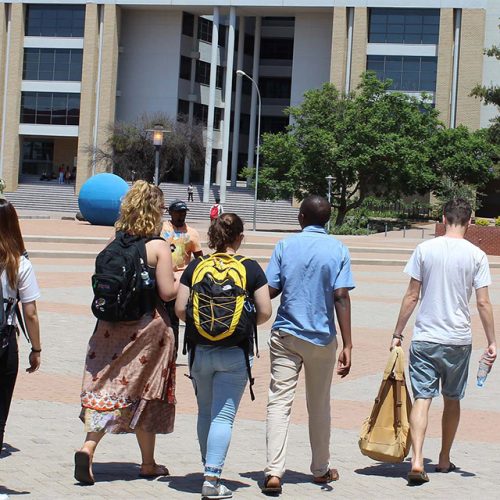
The University of Botswana has come up with a number of initiatives with the aim of moving towards becoming a high-performance organisation. One such initiative is the Industry Masterclass series that aims at fostering change through cultivation of academia-industry partnerships to ensure cross-fertilization ideas.
UB and BITRI Collaborate with CUT to Develop Sustainable Ways of Impacting Society
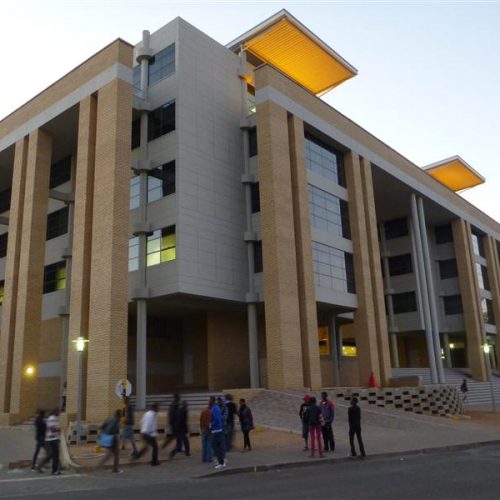
University of Botswana and Central University of Technology (CUT) in South Africa continue to explore new ways of collaborating and strengthening existing ties in different areas of Teaching and Learning and Research.
Against this background, a delegation from CUT led by Vice Chancellor for Research, Innovation and Engagement, Professor Alfred Ngowi, visited the University of Botswana on January 24, 2022 with the aim of expanding further their collaboration and engagement in research, teaching and learning.

Debate: African Education in the time of Industry 4.0
Across Africa's higher education sector there is an awareness that the fourth industrial revolution is here. Educators now have a tremendous responsibility to prepare the people and organisations of the continent for a time of rapid change.
It can be argued that in the time of Industry 4.0 the stakes are higher in Africa than anywhere else in the world. Africa's economic development has been accelerated by an ability to harness technology to leapfrog developmental steps in multiple industries. However, in a continent where many places have never seen the benefits of Industry 3.0, there is a danger of many being left behind as the demands of industry no longer match the skills available in the workforce.
Technology has the power to uplift millions of Africa. Similarly, it carries the threat of leaving millions more unemployed and locked out of the global economy.
How is the higher education sector preparing young Africans for an uncertain future? And how can Africa ensure it remains globally relevant in the fourth industrial revolution?