As part of a series of case studies on Africa’s regenerative agriculture and land regeneration projects, AfricaLive looks at Tamalu Farm in Kenya and at the work of L.E.A.F Africa.
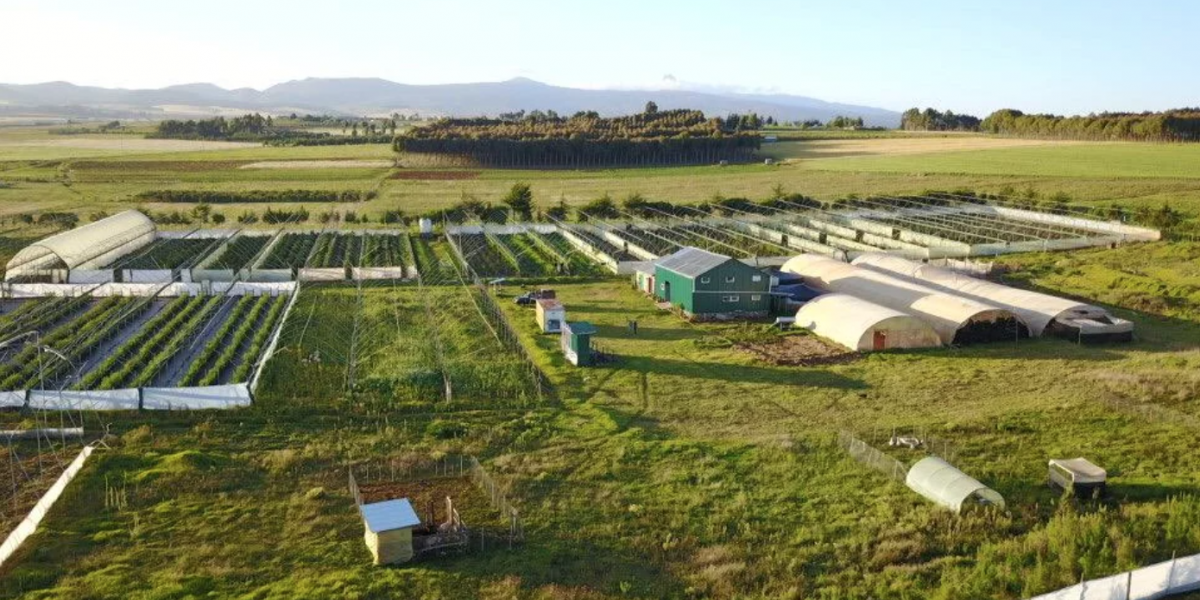
Tamalu Farm is one of a number of projects and demonstration sites L.E.A.F Africa are developing across Kenya. The 10-acre site on the slopes of Mount Kenya began life as a flower farm more than 15 years ago. Following an idle period of 12 years when nothing was cultivated, L.E.A.F brought the farm back to productivity in January 2019.
AfricaLive spoke with L.E.A.F’s Sven Verwiel regarding the project. You can read a wider discussion with Mr Verwiel on developing regenerative agriculture in East Africa here >>
Tamalu’s approach to farming and land management stands out as a live African demonstration of the syntropic agriculture approach which has enjoyed tremendous success in Costa Rica and Brazil. Bringing the syntropic approach to African agriculture could unlock a more sustainable & secure future for African farming.
Tamaulu Farm describes the regenerative agriculture methodology as a system of farming principles and practices that increases biodiversity, enriches soils, improves watersheds, and enhances ecosystem services.
Project Inspiration and Goals
The inspiration behind Tamalu farm started as a revival story – turning an old derelict flower farm into a hub for agro-ecological glory. Furthermore, the farm had sat idle for over 13 years and was already established with infrastructure for flower farming such as tunnels and greenhouses, a large surface pump, and kilometres of drip irrigation pipe.
When L.E.A.F Africa took over management in late 2018, we decided to incorporate the existing infrastructure into our design and create a series of regenerative enterprises that could showcase profitable land stewardship and farming practices.
We are really inspired by the work that has come out of Brazil over the past forty years.
So much of the Brazilian agro-scape is fitting to the African one. If you took the map of Brazil and laid it over East, Central and parts of Southern Africa you have very similar biomes.
It felt extremely comforting to see this. If the Brazilians can do it, surely we Africans can do it.
Funding
Finance has been totally private. When we took over management, the farm had a €300,000 deficit attached to it from when it collapsed as a flower farm.
Roughly €200,000 has been spent over a 2.5 year period reviving the farm. It must be remembered that small acreages often require intensive production and every square meter counts. Intensive production generally comes with high capital expenditure and operating expenses but returns can be very lucrative.
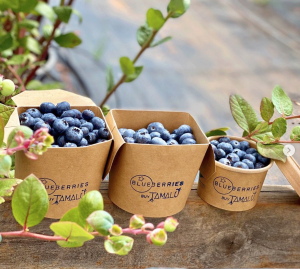
If the farm succeeds at raising USD 50,000 for new pumps, new irrigation systems, a renewable energy system to replace the diesel generator and to fill up the newly established rainwater reservoirs, we can expand on the blueberry and agroforestry sections. Projections look very promising.
Impact: Economic
The farm broke even in 2020 and we are now looking into making profits as of this year.
The goals of the project are to continue expanding blueberry production and our syntropic agroforestry system.
We started off by selling produce to the two towns very close to our farm. We then started getting a lot of demand from people in Nairobi and even at the coast which is 700km away from us. We expanded quickly and soon started getting more orders than we could handle.
Now we are launching a premium produce brand called Forest Foods – headquartered in Nairobi – which will absorb all of the produce grown on Tamalu, and the other farms we are looking to develop, and become the distribution and logistics agent for this produce.
In addition to agroforestry and blueberries, we have an acre of Khat which is a local plant and legal stimulant that is a high cash earner. Khat was a popular choice that would help offset some of the debts the farm had incurred over the years. This is coming into fruition now and we hardly look like the farm that was recently €300,000 in the red.
Expansion is currently hindered by water availability and the need for a renewable energy system to replace the diesel generator.
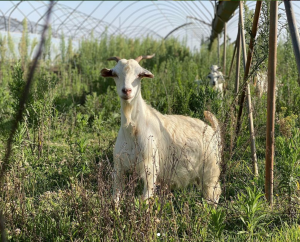
We also have livestock like goats and sheep who form part of our ecosystem. So there’s five enterprises; agroforestry, blueberries, our educational projects, khat and the fifth is livestock. I would only count the chickens as the enterprise because the goats and sheep are purely for nutrient cycling, we don’t earn money off them right now.
Impact: Social
Socially, despite COVID restrictions, the farm has made a very positive impact on the local Nanyuki and Timau communities who have had access to our beyond organic produce since mid-2019. We have a huge following and a strong support network from our client base. In terms of farm tours, workshops and apprenticeships, we have had over 500 people come through our farm to learn about regenerative agriculture in 2020 alone. We expect this number to triple once restrictions loosen.
We have had the most eclectic mix of people come to learn on site. We have had agricultural fanatics, proper flower farmers and people sending their gardeners to come and see. We have had people from all different races. Kenya is a very multicultural country and home to the United Nations headquarters.
Since the very first day we took over management, the entire team comprises of community members who live a stone’s throw from the farm – not a single employee comes from afar.
The team purchases their veggies and fruit directly from the farm at a discounted rate and they now know and trust where their food comes from. They have all been empowered with the skillset to work with the land, rather than against it. Some of our senior staff are now teaching workshops, guiding apprenticeship programs, and fully in control of farm tours.
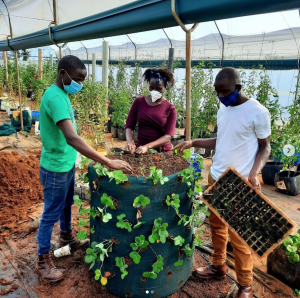
An apprenticeship program run on the farm
Impact: Ecosystem
Our pastured poultry, syntropic agroforestry, and rotational grazing of livestock has had the biggest impact on our farms’ environment. The soils are improving rapidly as we follow the principles of natural succession.
It is absolutely wonderful to see how much more insect, birdlife, and pollinators we have seen over the last 2.5 years. When we first took over, the diversity was minimal.
Regeneration takes time and therefore we are really excited to see what happens further down the line.
Outreach
How could readers of this article work with you or support you?
Readers are encouraged to follow our social media channels to stay updated on our progress. We also strongly encourage people keen on getting into regenerative practices to sign up for our apprenticeship programs.
And perhaps one day soon, we may set up a crowdfunding site to see if we can raise enough capital to at least invest in a renewable energy system for the farm.
Tamalu Farm on Instagram – YouTube – Facebook
Forest Foods Launch Video
